From the to-do lists guide
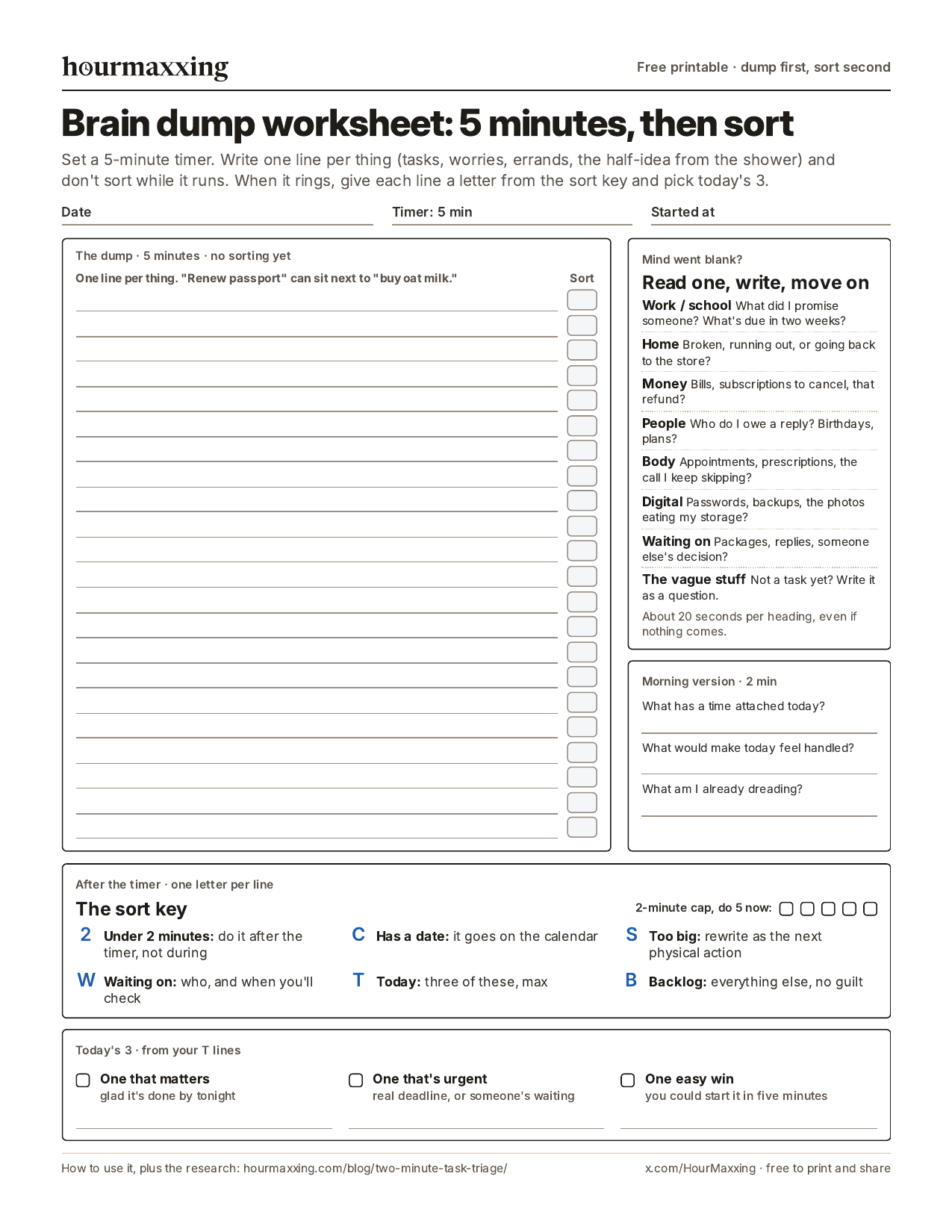
Brain dump worksheet
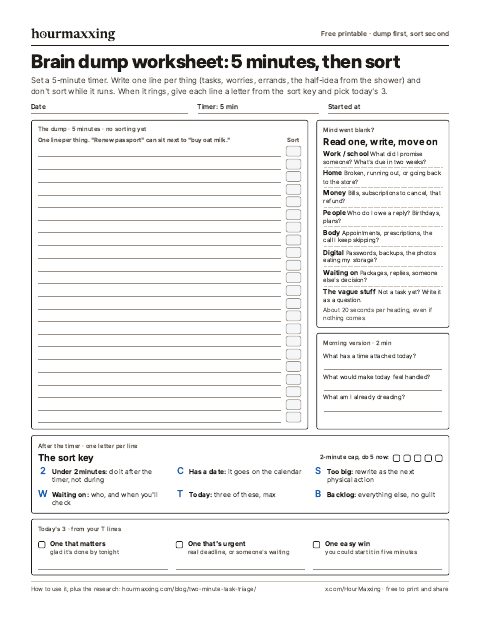
Empty your head onto the page, then give every line one letter: do it now, calendar it, shrink it, waiting on, today or backlog. Page 2 is the bedtime version, with a next step beside each worry.
19 PDFs you can print tonight. Each one comes from a guide that explains why it's laid out the way it is, so you're not just getting a pretty grid.
Empty your head onto the page, then give every line one letter: do it now, calendar it, shrink it, waiting on, today or backlog. Page 2 is the bedtime version, with a next step beside each worry.
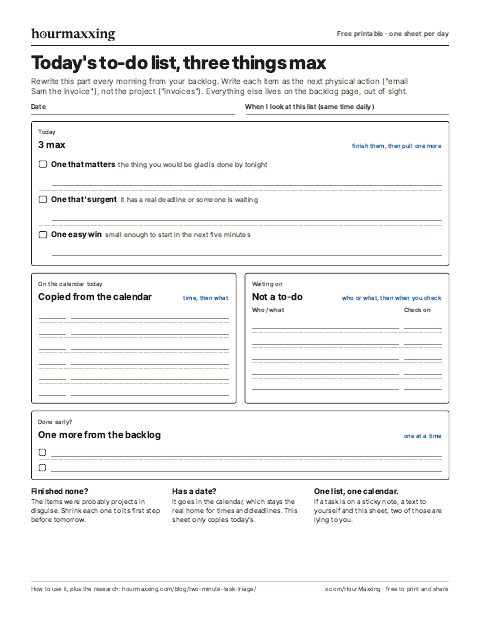
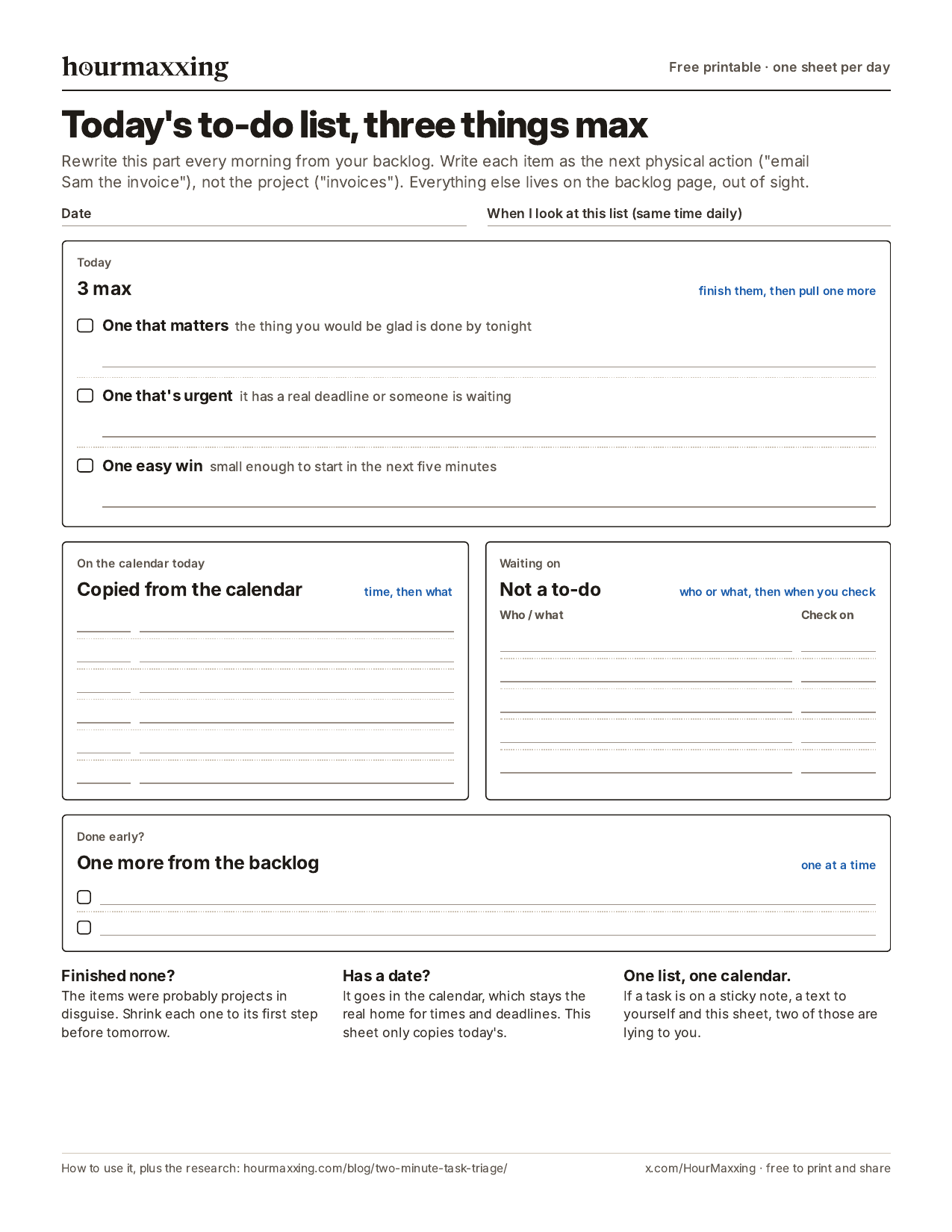
Three lines for today: one that matters, one that's urgent, one easy win. Room for today's calendar and a waiting-on column. Page 2 is the backlog, which stays out of sight until the weekly scan.
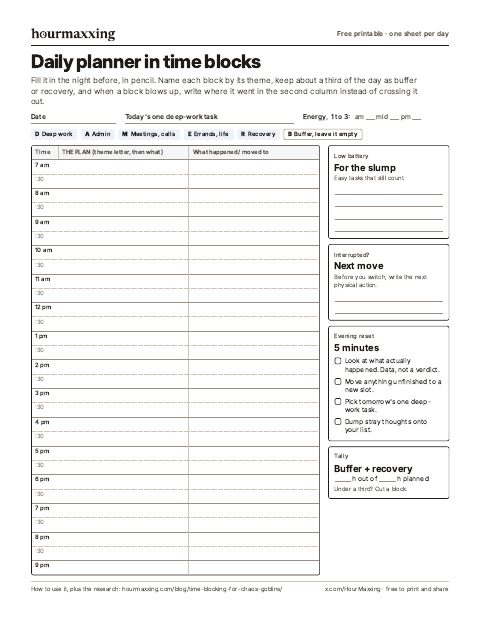
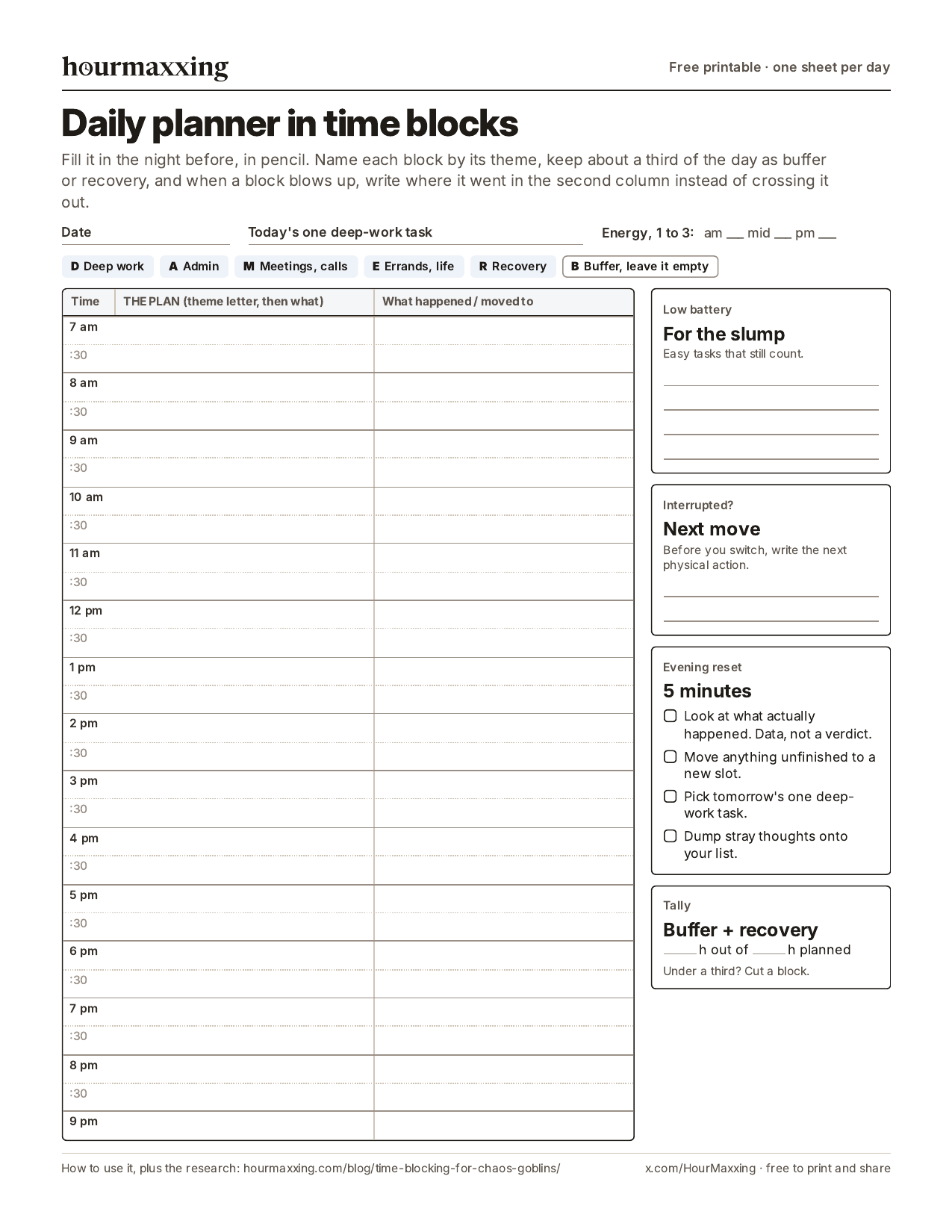
7 am to 9 pm with two lines per hour, with a second column so a blown-up block gets moved instead of deleted. Page 2 logs guessed versus actual minutes to find your real time multiplier.
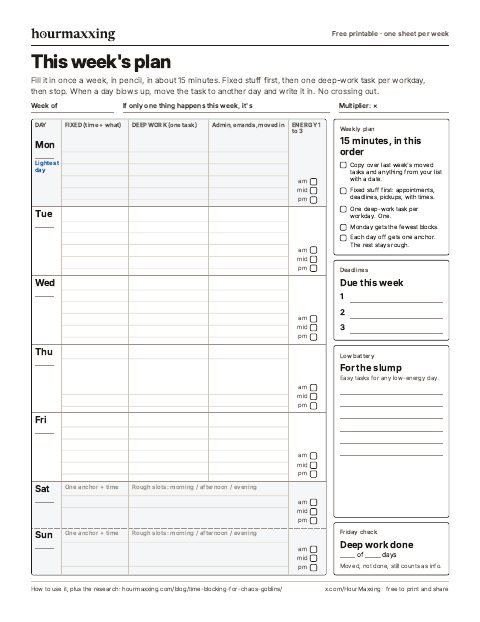
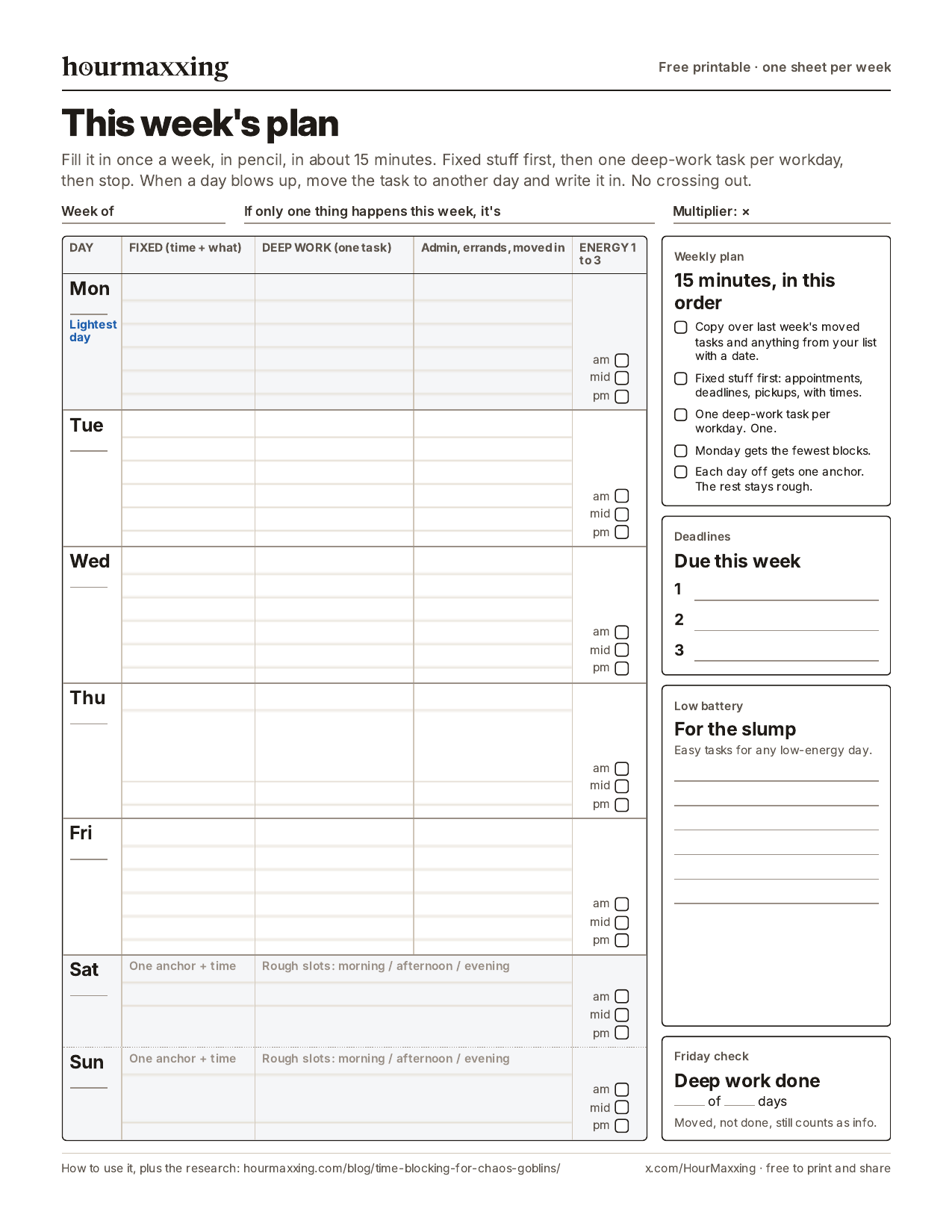
The whole week on one sheet: fixed stuff, one deep-work task a day, and three tiny energy ratings, so after a few weeks you know when your good window actually is.
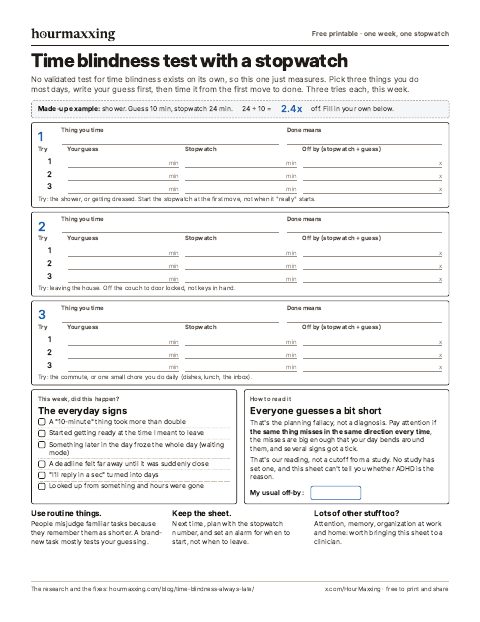
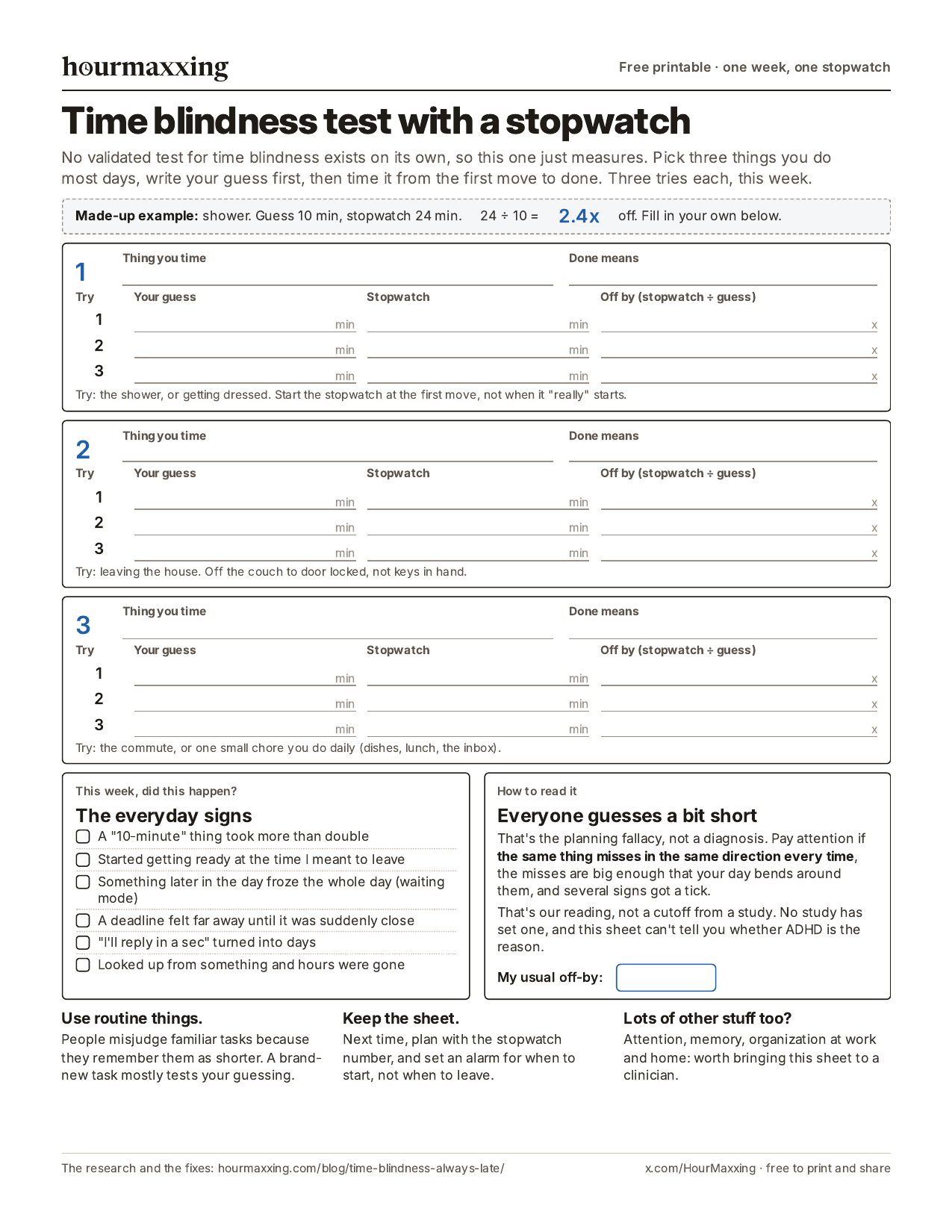
A one-week stopwatch test, not a quiz: three routine things, your guess written first, three timed tries each, and how far off you were. Plus a tick list of the everyday signs and how to read your numbers.
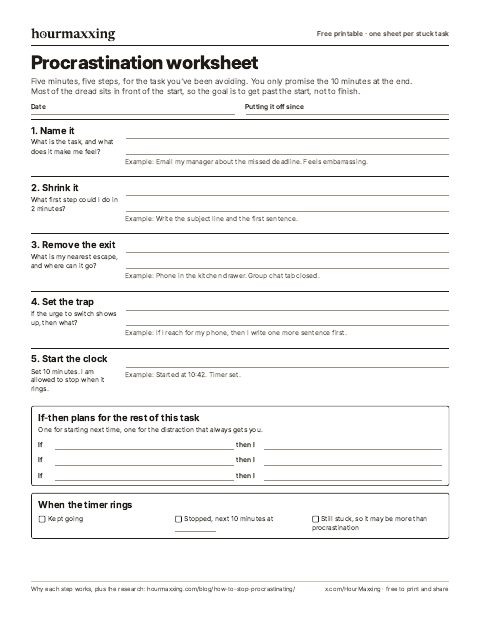
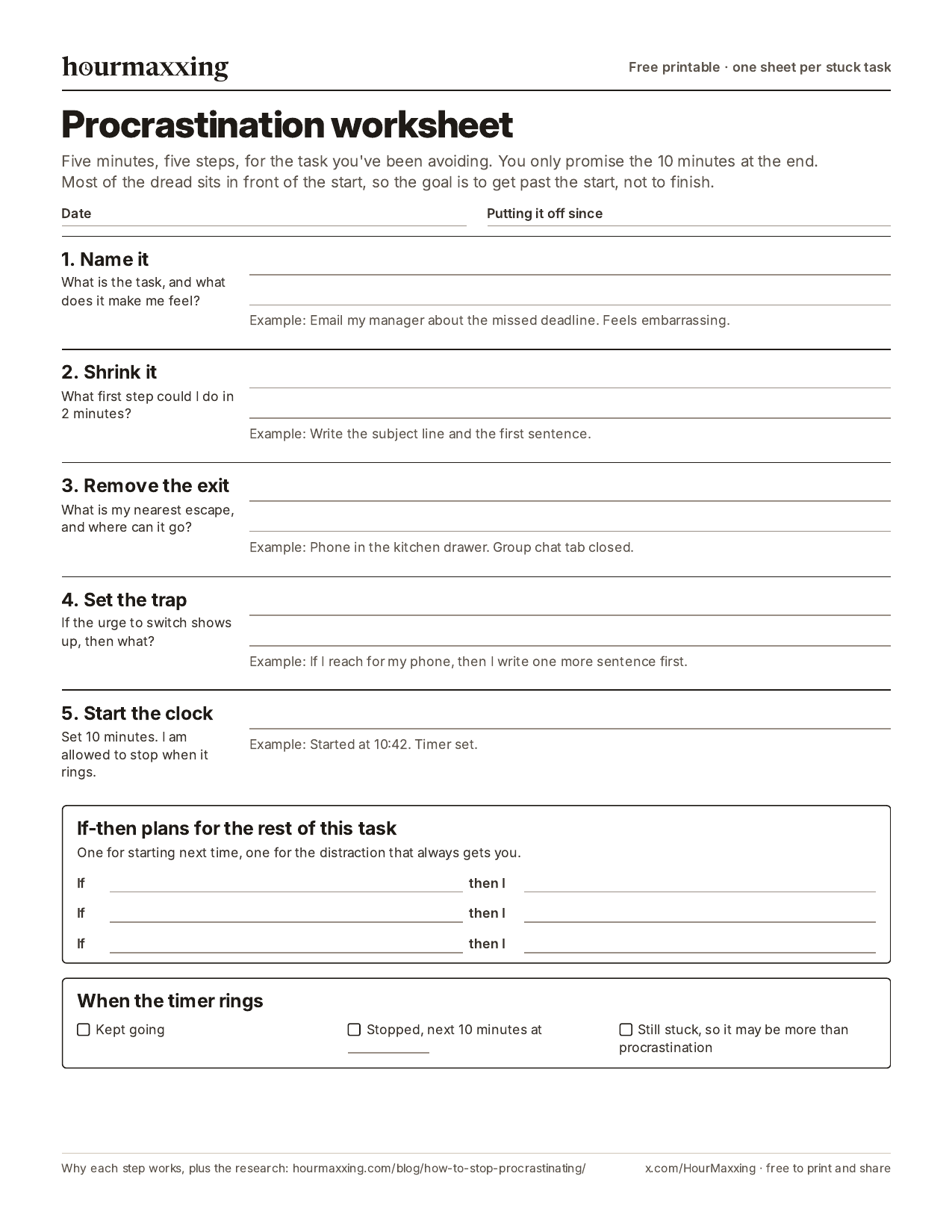
The 5-minute unstick script on paper: name the task and the feeling, shrink it to a 2-minute step, move the escape, write the if-then, start a 10-minute timer. Plus three if-then plans and what to do when the timer rings.
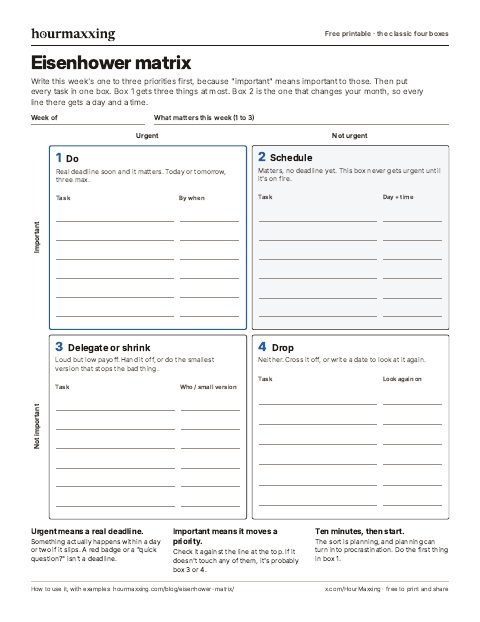
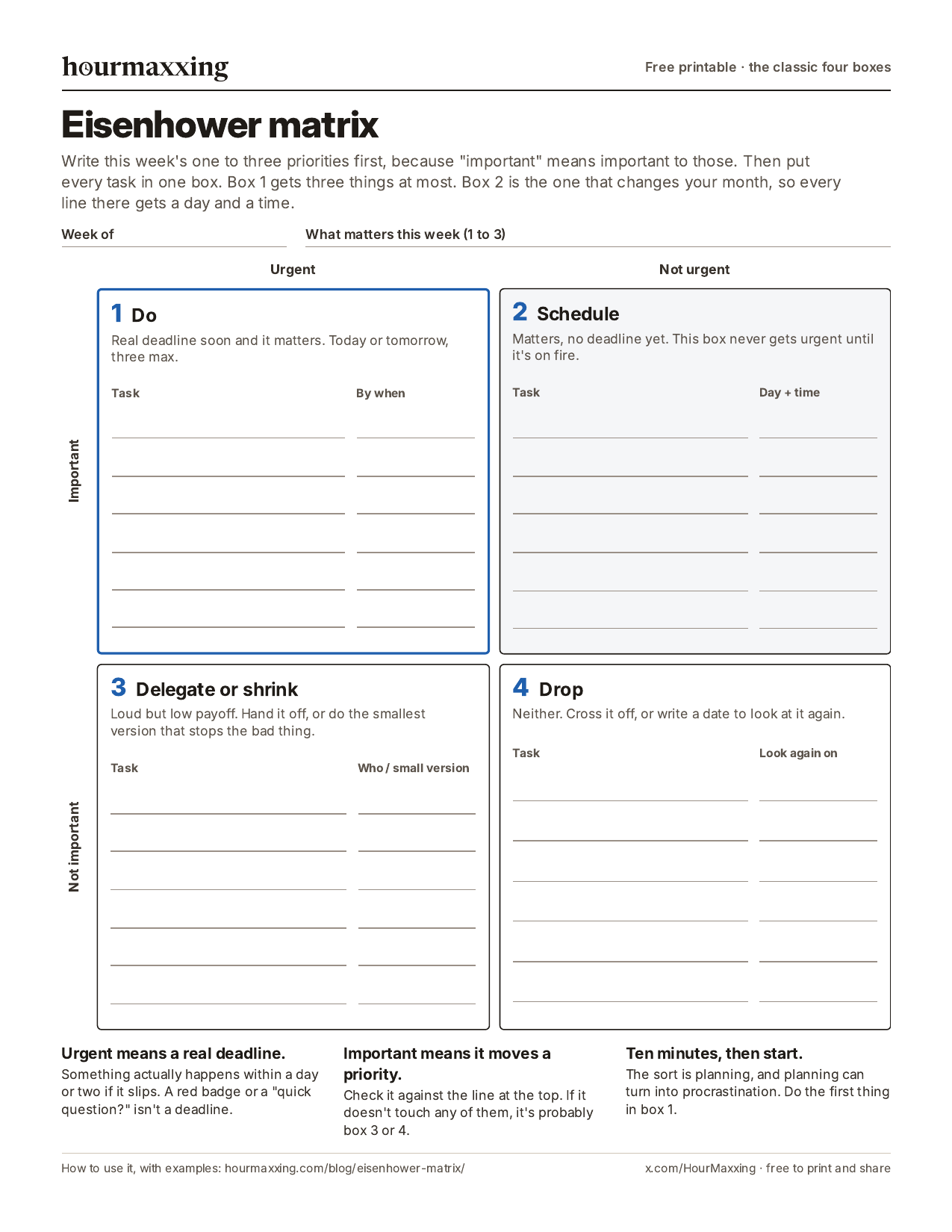
The classic four boxes (do, schedule, delegate or shrink, drop) under a line for this week's priorities, with a day-and-time column for box 2. Page 2 is a sorting sheet with a what-it's-worth column and a Friday check on box 2.
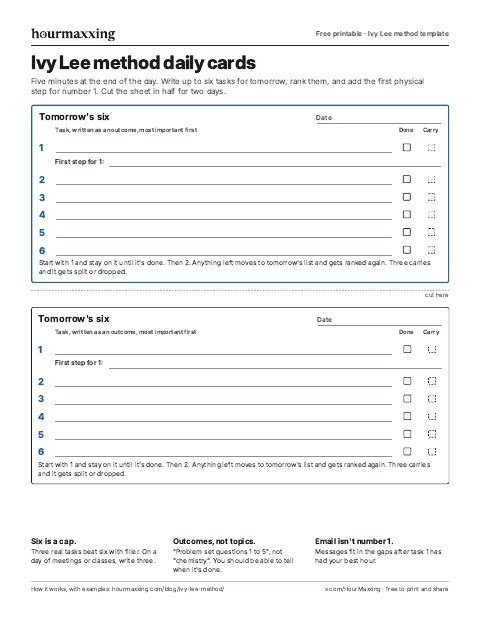
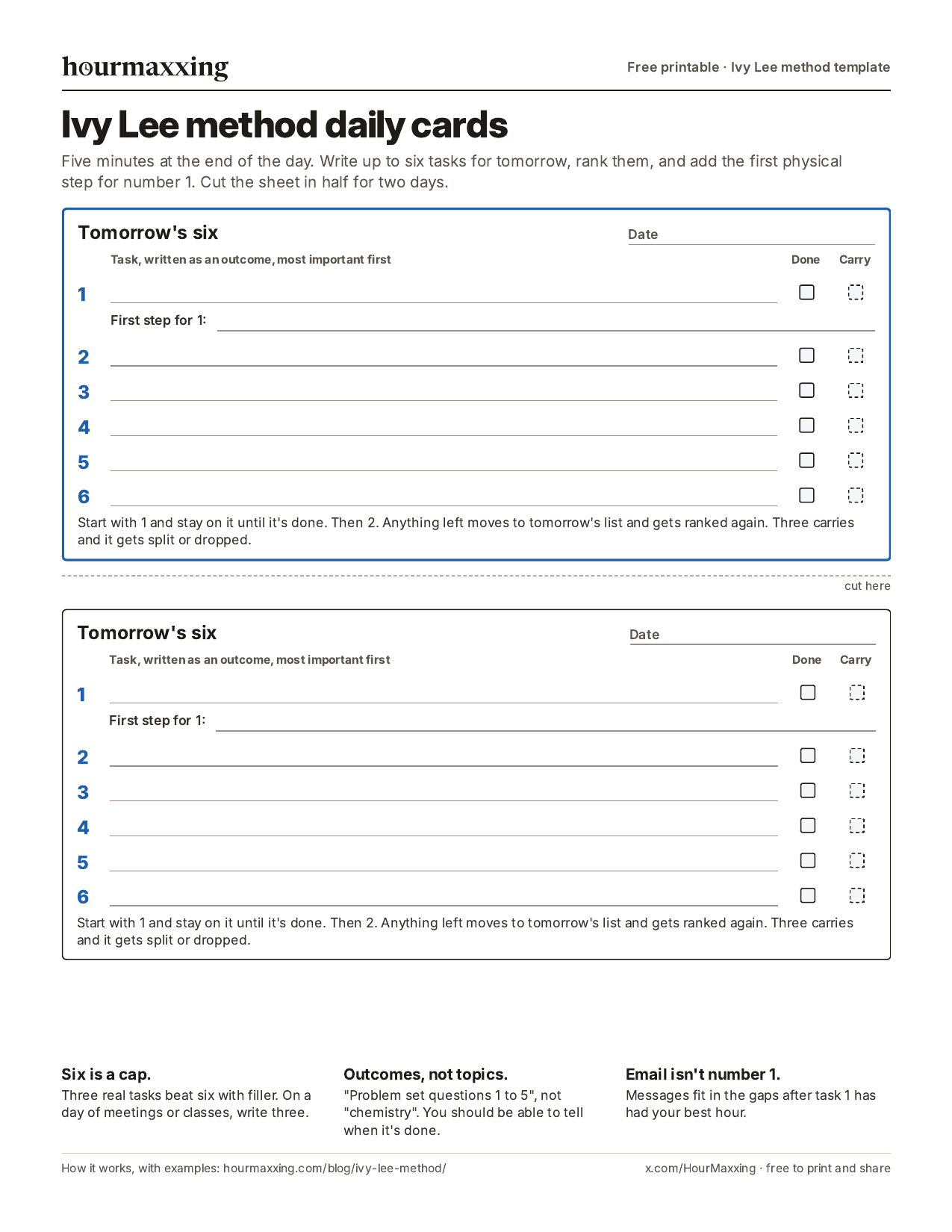
Two cut-out daily cards with six ranked lines, a first step for task 1, and done and carry-over boxes. Page 2 is a five-day week of Ivy Lee lists with a Friday three-strikes check for tasks that keep sliding.
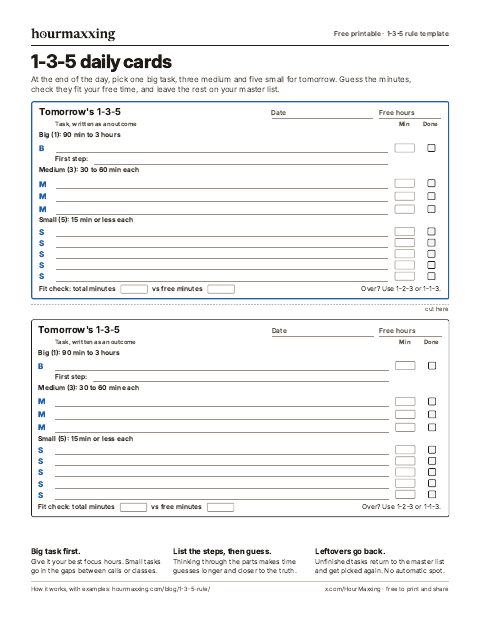
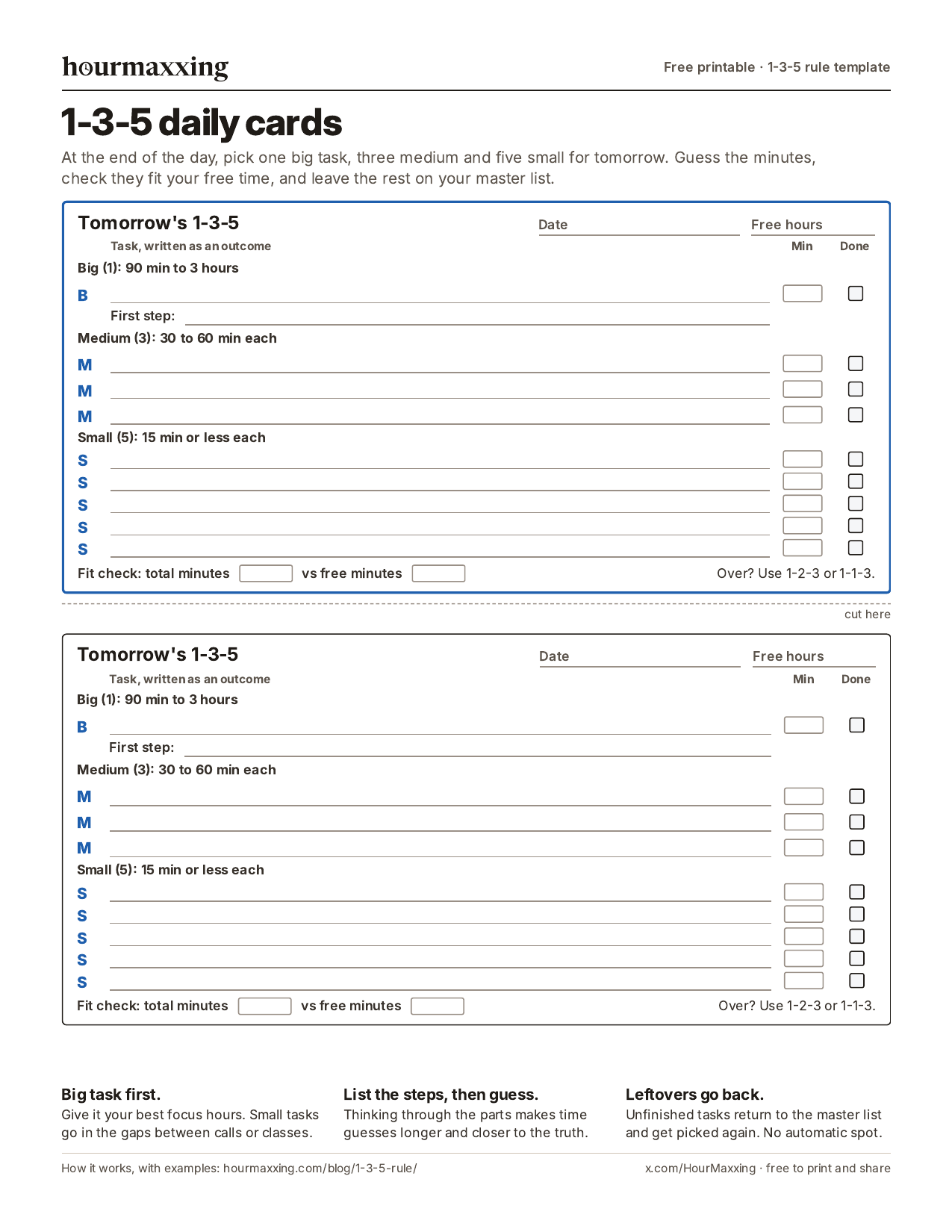
Two cut-out daily cards with one big, three medium and five small lines, a minutes box per task and a fit check against your free hours. Page 2 is a sizing sheet for 15 candidates plus the smaller shapes for meeting days and bad days.
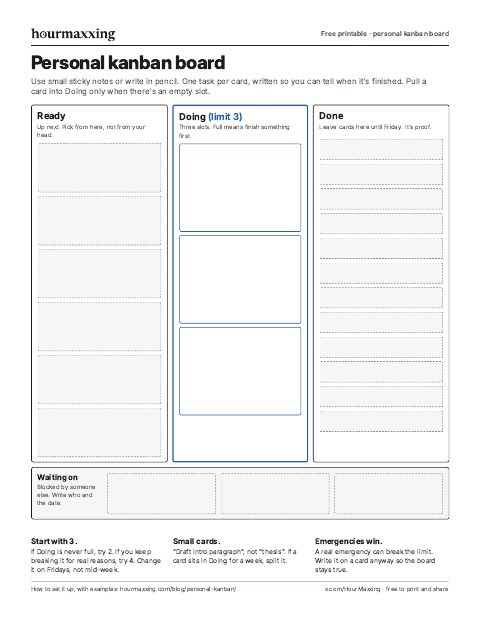
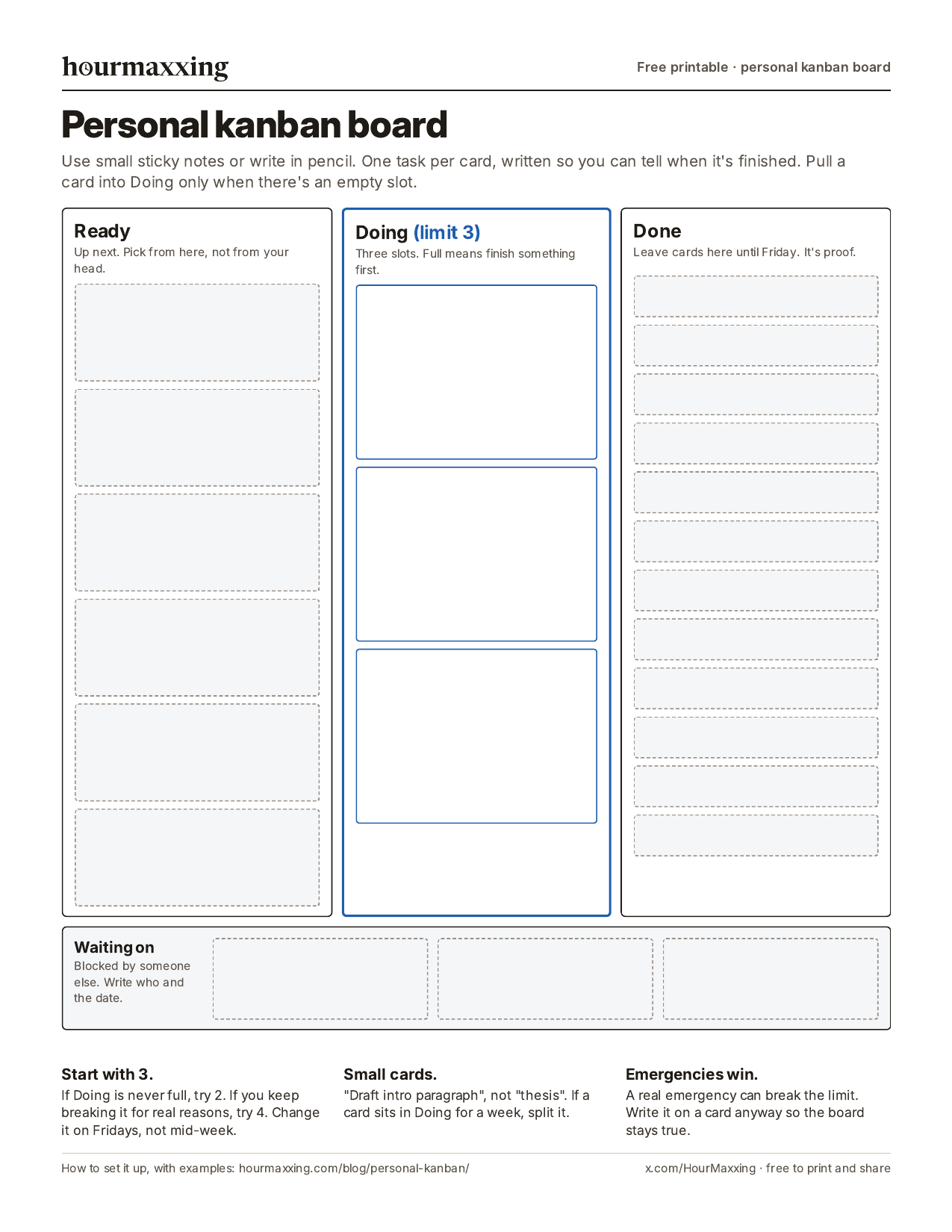
A three-column board (Ready, Doing with three slots, Done) plus a Waiting on strip, sized for small sticky notes or pencil. Page 2 is a backlog list and a ten-minute Friday check for changing your limit.
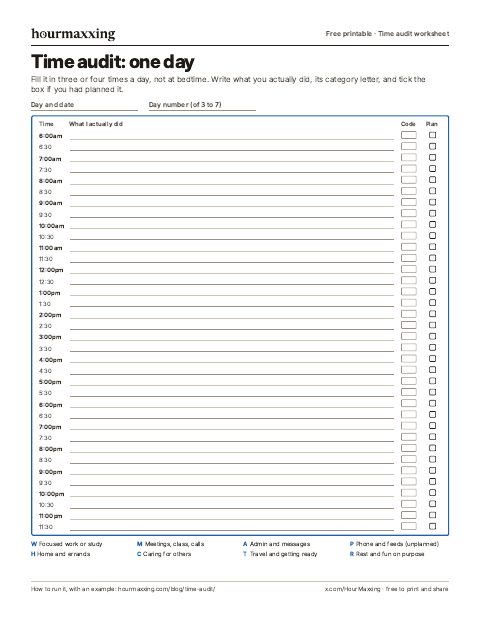
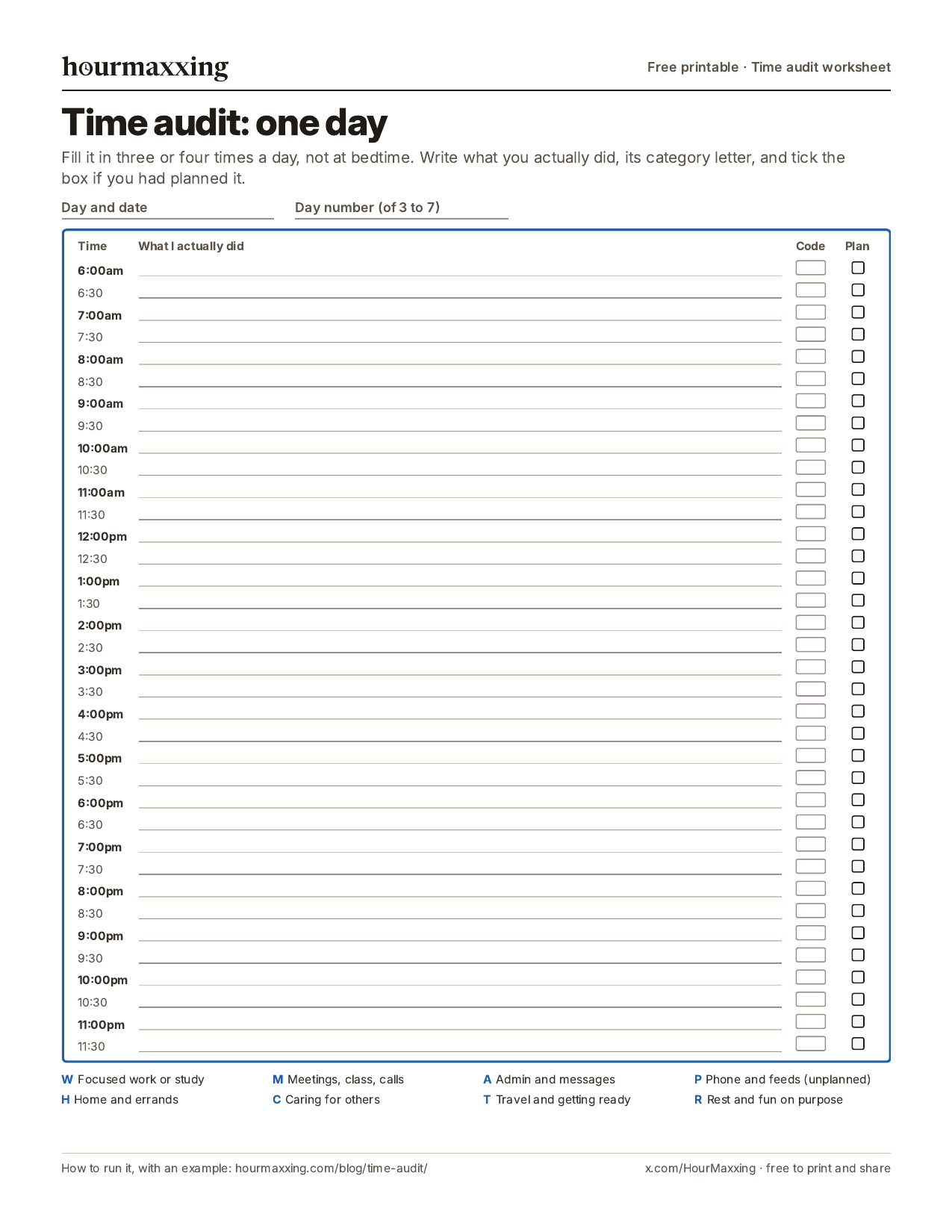
A one-day log from 6am to midnight in half-hour rows, with a category code and a planned box for each block. Page 2 compares guessed, actual and wanted hours per category, then asks what to keep, cut and move.
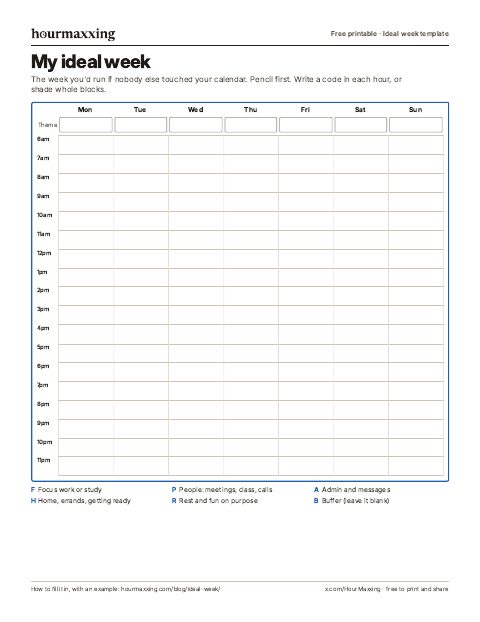
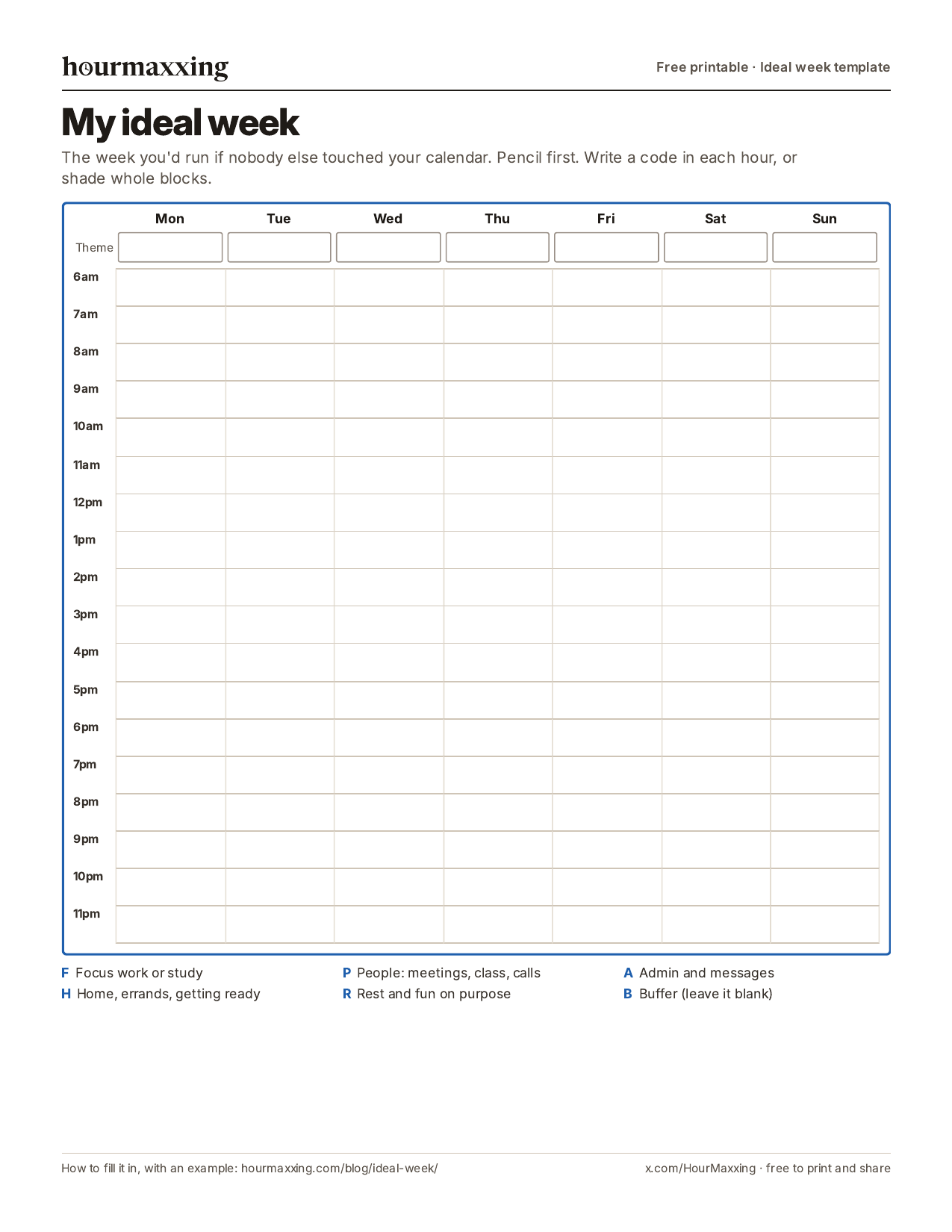
A Monday to Sunday grid from 6am to midnight in hourly rows, with a theme box per day and six block codes. Page 2 is the build order, your guardrails, planned vs real hours per block type and a two-week check.
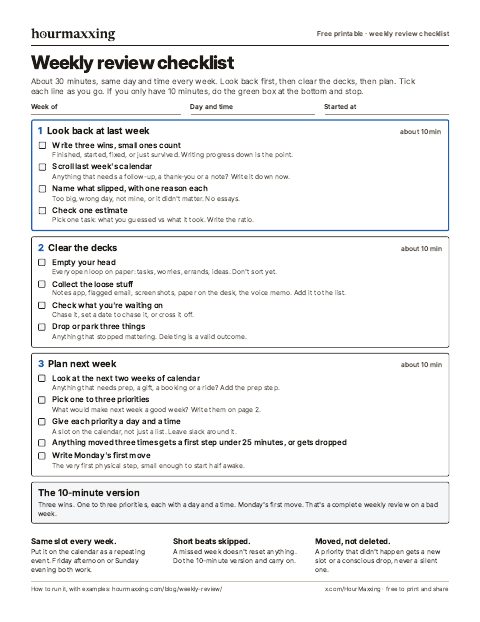
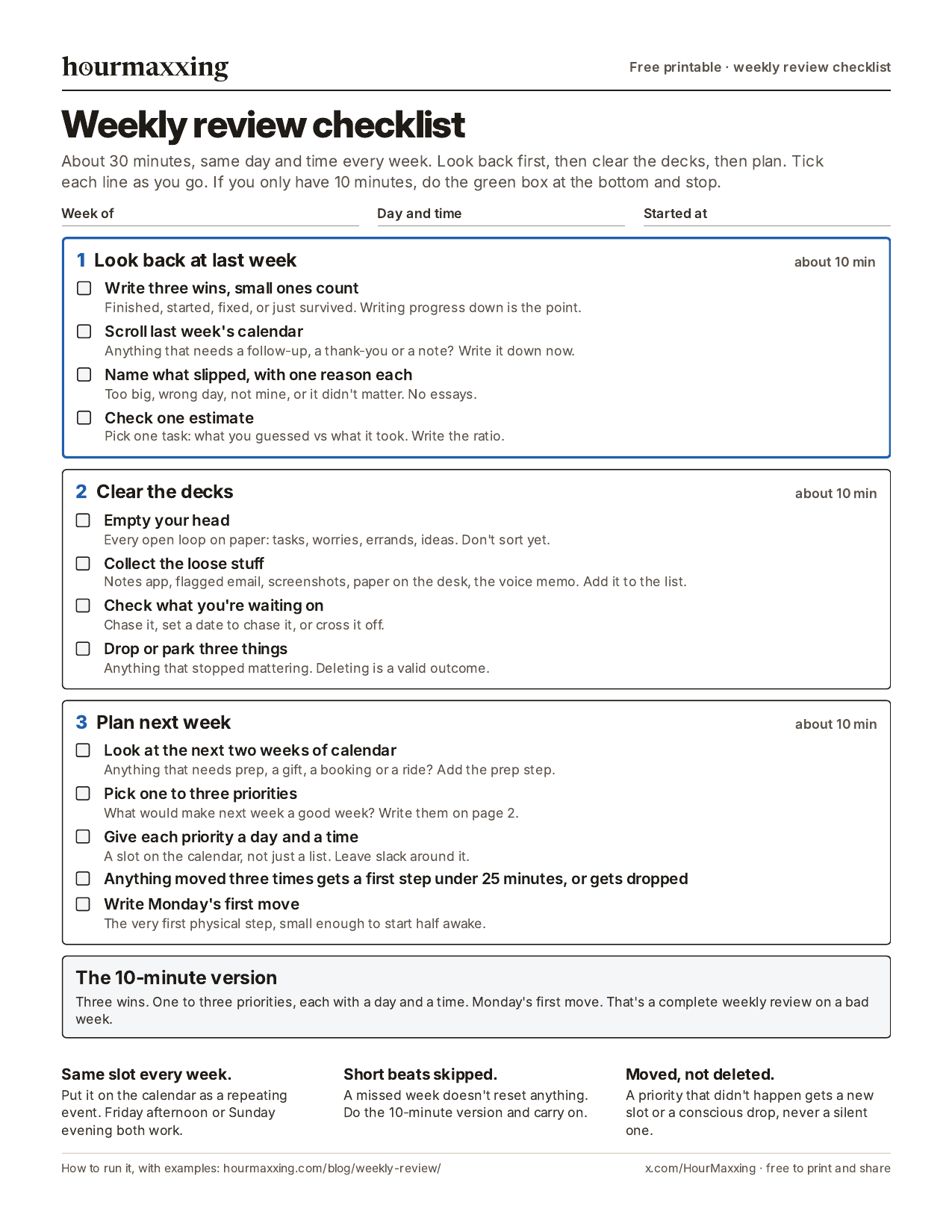
A 30-minute weekly review checklist in three parts (look back, clear the decks, plan next week) with a 10-minute version for bad weeks. Page 2 is the weekly review questions, three wins and one to three priorities with a day, a time and a first step.
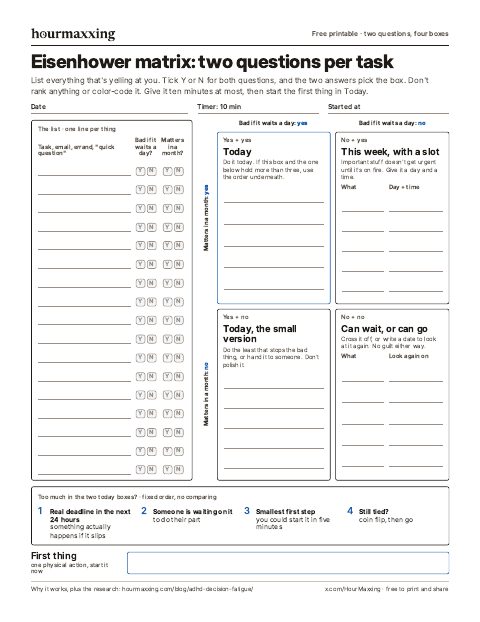
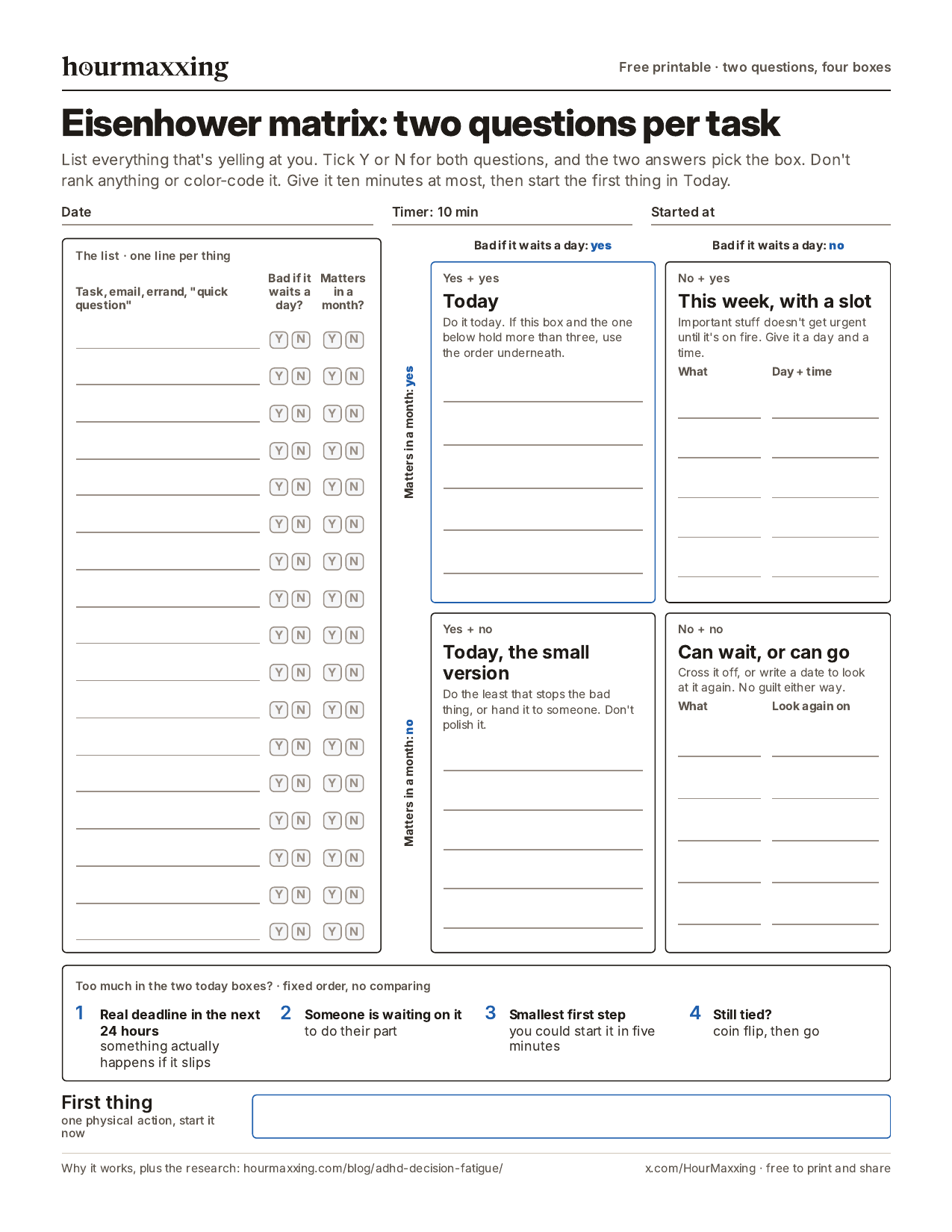
For days when everything feels urgent. Two yes-or-no questions per task pick its box, so you never rank anything. Page 2 is the 2pm siren check: what actually happens if this waits until tomorrow?
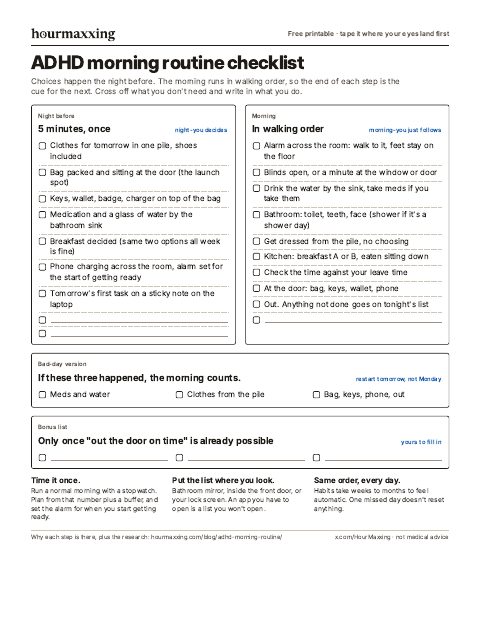
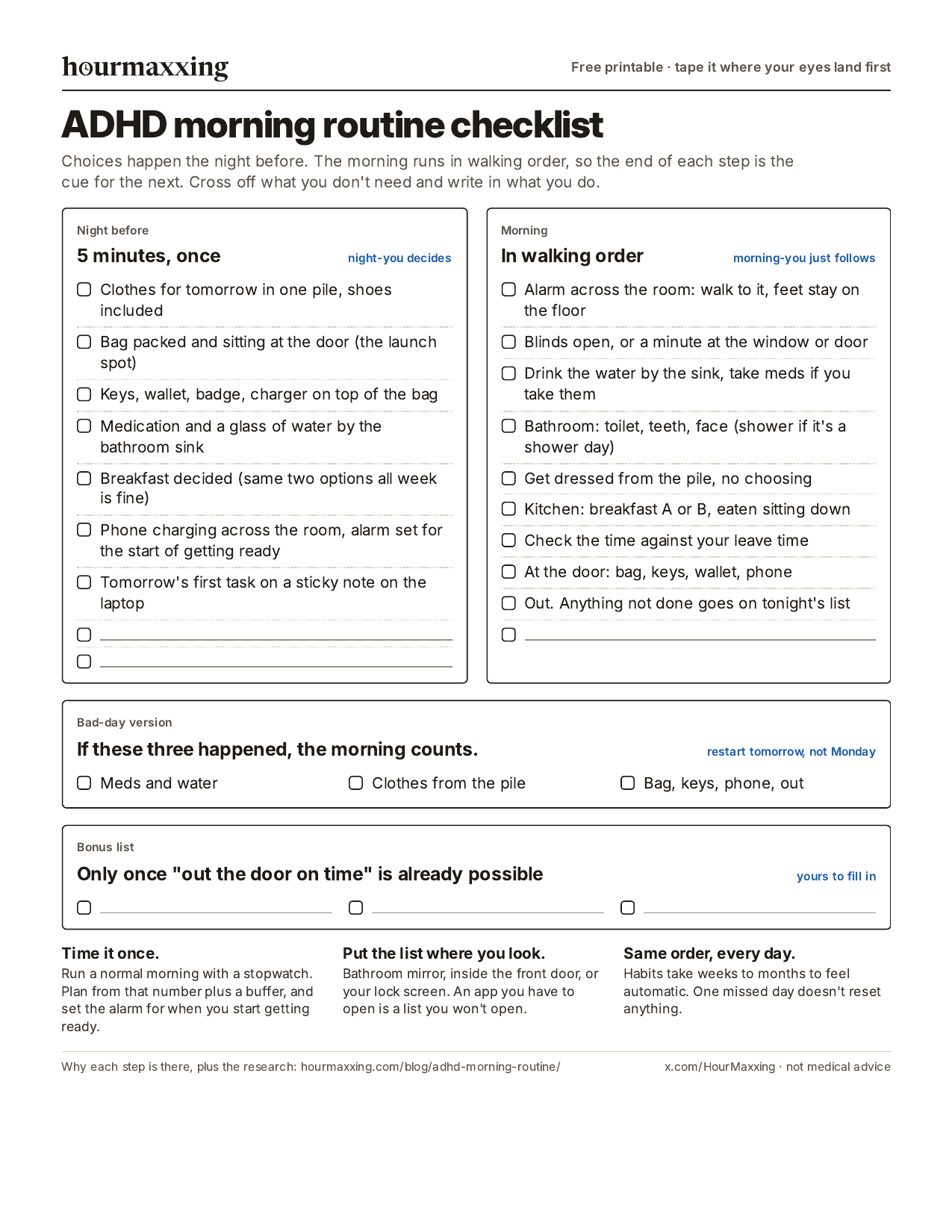
A night-before list, the morning steps in walking order and a bad-day version. Tape it where your eyes land before your phone does.
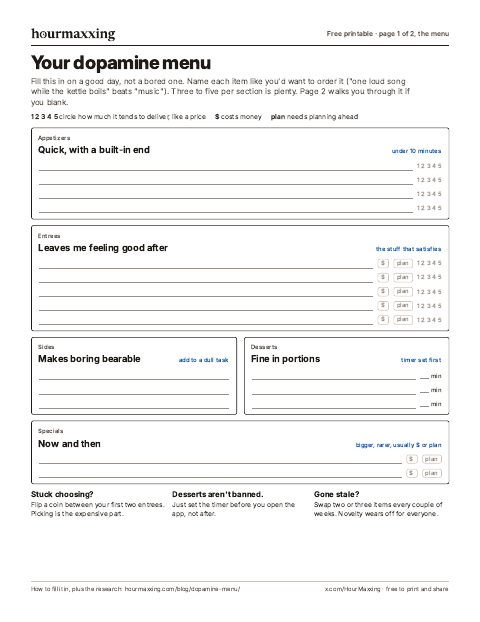
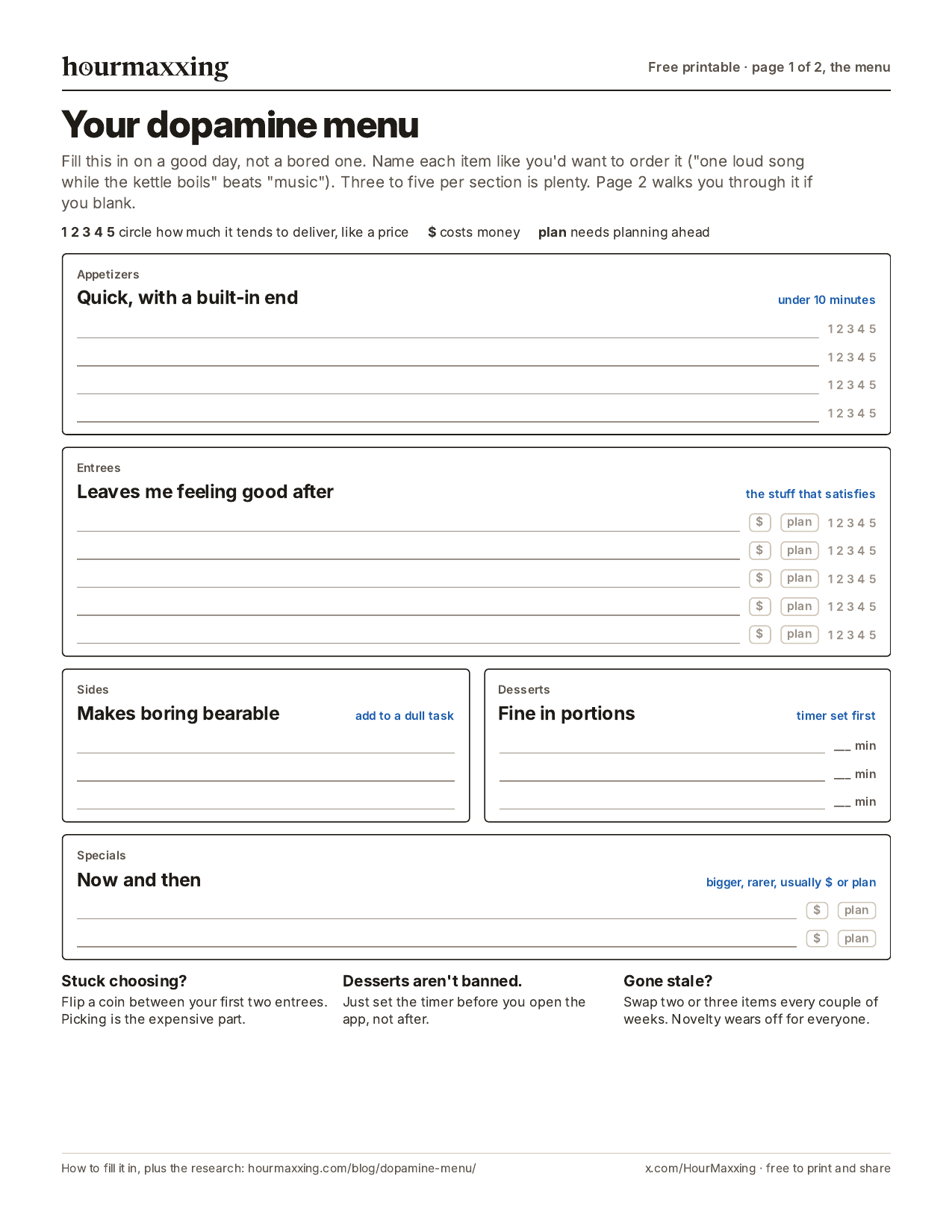
Appetizers, entrees, specials and desserts, each rated 1 to 5 for how much it tends to deliver. Page 2 walks you through writing it in about 20 minutes.
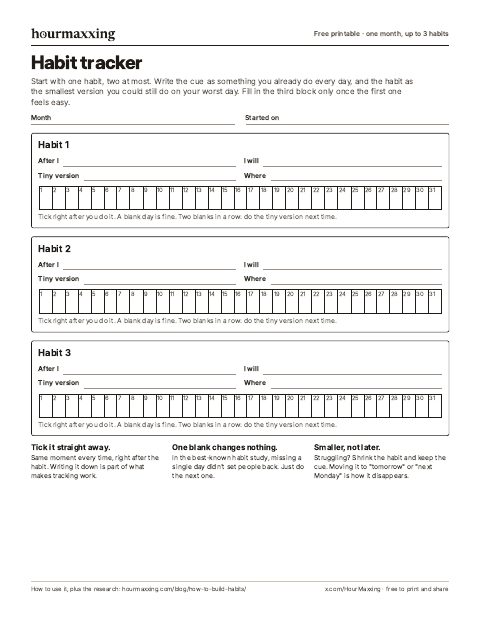
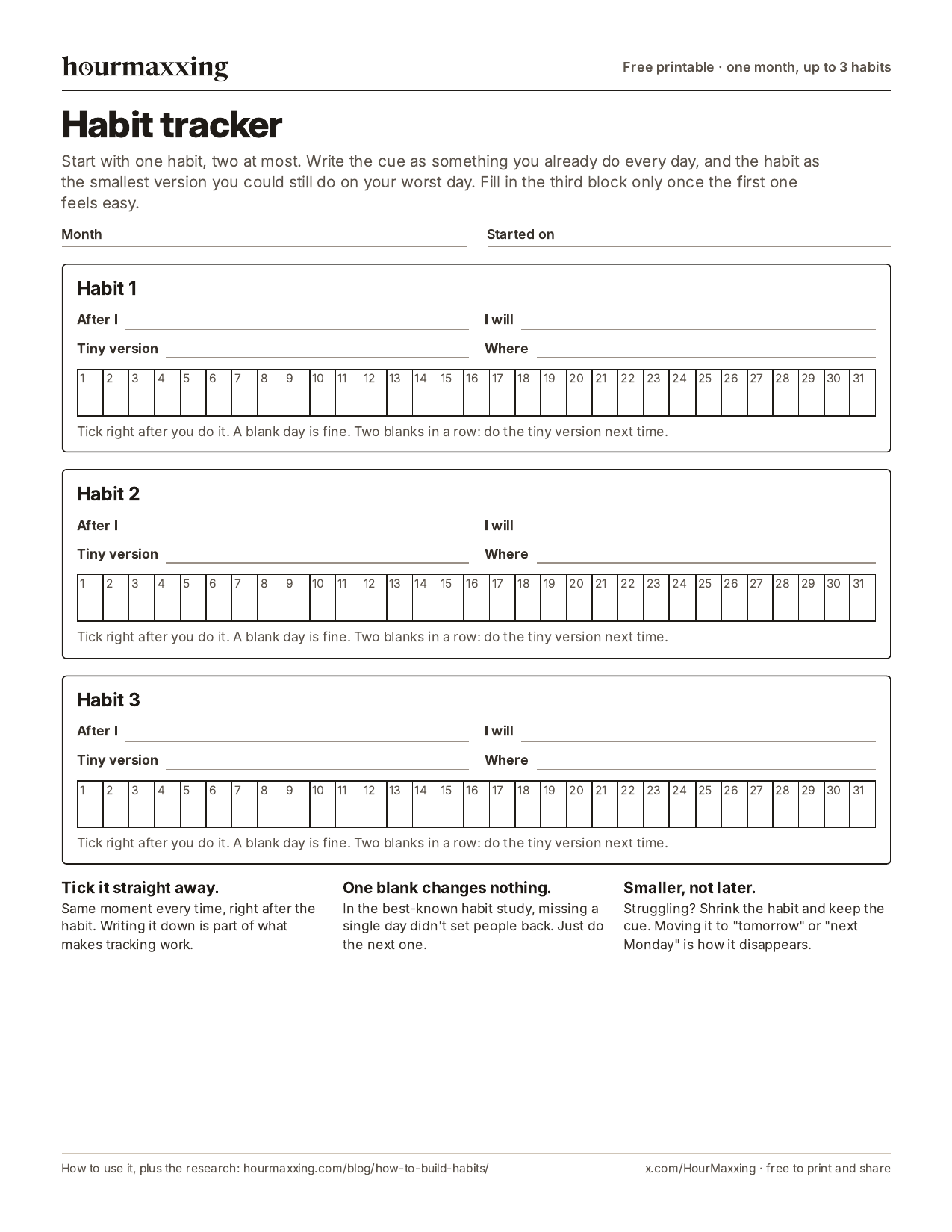
One month for up to 3 habits, each with its cue, a tiny version and 31 tick boxes. Page 2 is a 10-week check that scores how automatic the habit feels, so you know when to start the next one.
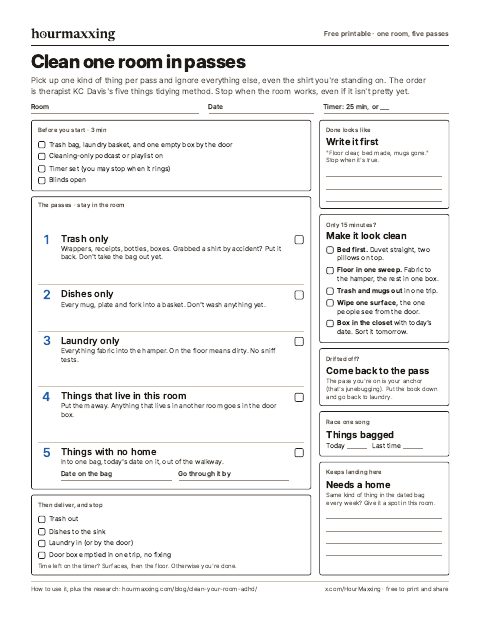
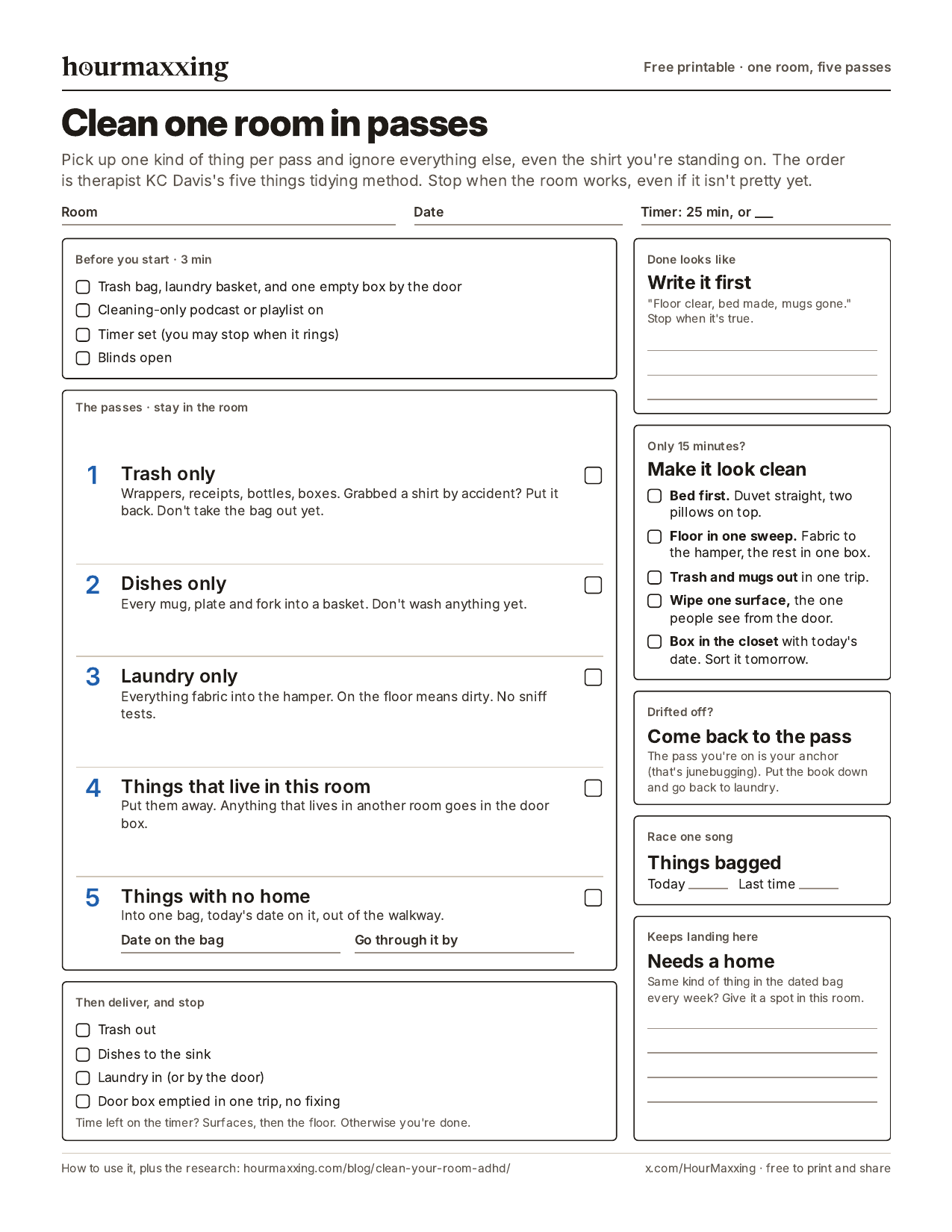
One room in five passes, trash first, with a "done looks like" box and a 15-minute version. Page 2 is a four-week cleaning schedule.
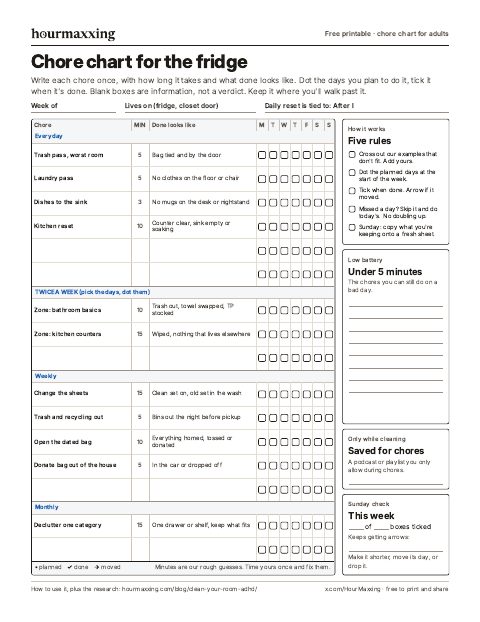
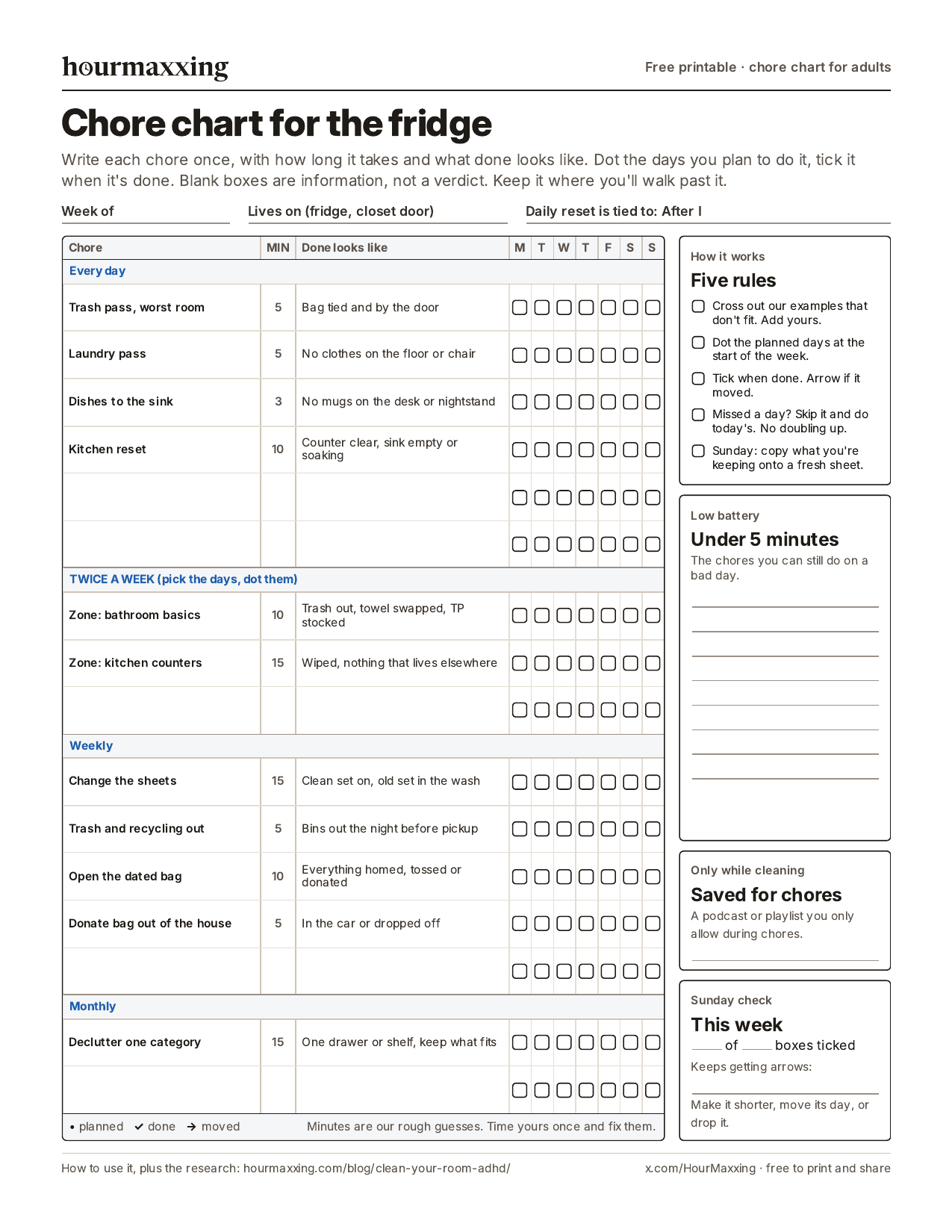
A week of chores for the fridge door, with minutes and what done looks like. Page 2 splits them with a partner or housemates, including who notices a chore needs doing.
If your head is full, the brain dump worksheet. Everything else works better once the 47 open loops are on paper instead of in your skull. If you already know what needs doing and the day keeps getting away from you, the time-blocked daily planner. If you're not sure your sense of time is off at all, the one-week time blindness test settles it with a stopwatch.
If you know what's on the list and need to decide what actually matters this week, the Eisenhower matrix template, or the two-question ADHD version if rating every task freezes you. If it's one particular task you keep putting off, the procrastination worksheet. If you're trying to make something stick, the habit tracker (type your habits and print a monthly grid, or grab the PDF).
One sheet is plenty. Printing all 19 and laminating them is a very fun way to not start anything.
Go ahead. Teachers, librarians, coaches and therapists can print as many copies as they like for students, groups or clients, free. We only ask that you keep our name on the page and don't sell them. If you link to them, this page is the one that stays up to date.
They're not medical advice, and we're not clinicians. They're paper tools built on the research cited in each guide.